
CRITICAL FACILITIES: ENSURING RESILIENCE AND CONTINUITY
Critical facilities are the backbone of societal functions, encompassing infrastructure and services essential for public health, safety, and economic well-being. This page delves into the various types of critical facilities, their significance, and best practices for their design, construction, and management to ensure uninterrupted operations during emergencies.
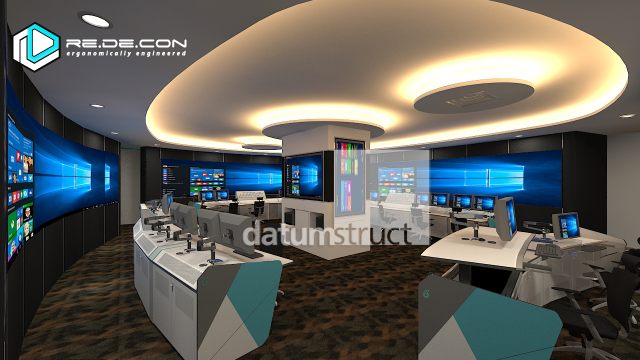
What Are Critical Facilities?
Critical facilities are the foundational systems that keep society functioning. These include infrastructure and services whose failure would disrupt daily life, pose safety risks, or compromise national stability. From healthcare and energy to transportation and telecommunications, critical facilities are designed to operate continuously, even under pressure.
Because these environments support essential operations, their design and reliability are treated as national priorities. Therefore, maintaining their performance is vital for public welfare and operational continuity.
Key Sectors Considered Critical
Healthcare
- Hospitals, clinics, and emergency services are essential for public health and crisis response.
Energy
- Power plants, substations, and energy infrastructure provide the electricity needed to run homes, businesses, and essential services.
Transportation
- Airports, bridges, and traffic control systems keep people and goods moving safely and efficiently.
Communication Networks
- Telecommunications infrastructure connects governments, businesses, and the public, supporting coordination and access to information.
Design and Construction Considerations
Designing critical facilities requires more than just functional space planning. Every decision must account for long-term performance, safety, and adaptability. The following considerations are essential for creating spaces that can meet the demands of high-risk, mission-critical environments:
Resilience
- Facilities must be built to withstand both natural hazards and human-made threats. Structural integrity, secure access points, and risk mitigation strategies are key to ensuring operational continuity during disruptions.
Redundancy
- Backup systems are essential in critical environments. This includes power supply, data systems, HVAC, and communications, all of which must have fail-safes to prevent single points of failure.
Compliance
- Designs must adhere to relevant local regulations and international standards. This includes fire safety, electrical codes, accessibility requirements, and technical specifications for control room infrastructure.
Sustainability
- Sustainable design improves long-term efficiency and lowers operational costs. The use of eco-friendly materials, energy-efficient systems, and smart building technologies supports both environmental goals and modern operational needs.
Datumstruct integrates these considerations into every control room design project, ensuring facilities are built to perform, adapt, and endure.
Future Trends in Critical Facility Management
Technological Advancements
- Technological Advancements
Emerging technologies such as AI-driven monitoring, digital twins, and predictive analytics are transforming how critical facilities are managed. These tools enable real-time decision-making, automate fault detection, and optimise resource use for greater operational resilience.
Climate Change Adaptation
- Facilities are increasingly being designed to withstand extreme weather, rising temperatures, and flood risks. Adaptive infrastructure planning, improved drainage systems, and the use of climate-resilient materials are becoming standard considerations in long-term facility strategies.
Compliance
- Designs must adhere to relevant local regulations and international standards. This includes fire safety, electrical codes, accessibility requirements, and technical specifications for control room infrastructure.
Public-Private Partnerships
- As threats grow more complex, collaboration between governments and private operators is critical. Public-private partnerships enable shared expertise, funding, and innovation in areas such as infrastructure security, emergency response, and technology integration.
Frequently Asked Questions
1. What qualifies as a critical facility?
- Critical facilities are sites that are essential to the functioning of society, such as hospitals, data centres, transport hubs, and command control centres that support real-time decision-making and emergency response.
2. Why is control room design so important for critical facilities?
- Control rooms act as the operational core of many critical environments. A well-designed security control room supports situational awareness, rapid response, and seamless monitoring of essential systems.
3. What technologies are commonly used in critical facility environments?
- Technologies include integrated communication platforms, secure networks, environmental monitoring tools, and large-scale video wall systems for displaying live data across multiple sources.
4. How do critical facilities prepare for unexpected disruptions?
- Redundancy, resilience, and real-time monitoring are key. Facilities are equipped with backup systems, fail-safes, and centralised control room infrastructure to ensure continuity under pressure.
PRODUCT
FEATURED CASES
WHAT’S NEW
- Redecon Consoles vs Office Furniture
- What Is the Difference Between an Air Purifier and Air Sanitizer?
- The New Norm In The Control Room During Covid-19 Pandemic
- MIRI Global Certified That Air Halo Portable Air Sanitizer Can Eliminate 99% of Covid-19 Virus
- We're Upgrading!
- REDECON Consoles Featured in Pengerang Integrated Complex (PIC)

©2021 Datumstruct CFS | All Rights Reserved